Raising Disciples

As parents, our first responsibility, in both a priority sense and chronologically, is to raise our kids to be disciples of Jesus. As I look back over my life, I see three experiences in my own discipleship that parents can apply to raising up their kids as disciples.

  1. Private Moments with Mama. My mom (We called her Mama growing up.) is the most impactful human in my life’s history; I didn’t realize it until years later – not fully until after she’d passed away – what a force she was. She had such a quiet and humble demeanor that one would never describe her as forceful, but of all the ways that I know God, the majority of them I learned without even realizing I was learning, before I even reached the point of surrendering my life to Christ, being born again or receiving the indwelling Holy Spirit. 

Here’s the way she did it. She would draw herself close to me, literally, and speak very softly, often in a whisper, in the context of whatever was going on in my life. Her superpower as a mom was being able to say exactly the thing I needed to hear. Her soft messages always challenged me to consider God, recognize that He was present with me, and respond in the way He wanted. As I look back fifty years later now, those moments were the most powerfully formative that I’ve ever experienced. I only wish I’d recognized their value so I could’ve thanked and valued my mother more. 

Parents, remember that the greatest opportunities in your whole life may be the open ears – and hearts – of your child in their most vulnerable moments. Don’t miss them. And don’t ruin them by being overbearing in moments that call for gentleness.

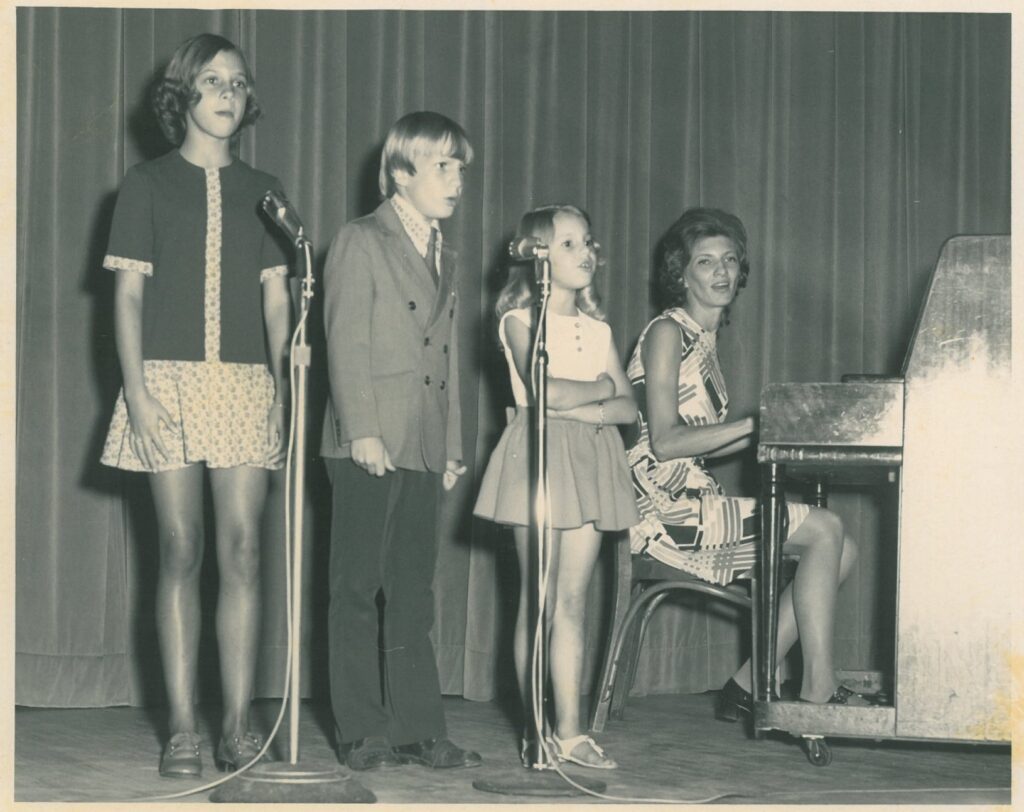
  1. Times of Spirit-filled Corporate Worship. My parents had us kids in our Bible-believing rural Baptist church every Sunday. In addition to that, my mom played the piano and formed a family gospel singing group with two of my sisters and me. We sang all over our county in local church revival services (where we often witnessed and experienced very powerful moves of God’s Spirit).  Those experiences allowed me to know God in a way many people never get to. 

Parents, we don’t want to over-delegate our kids’ spiritual training, but having them in a solid church and in worship service alive with the Spirit will serve them well in their relationship with God.

  1. Just friends. A lot of parents miss this, but there comes a time (when the kids grow up) when the only help a parent can be to them is by being their friend. Authority is a thing of the past. They were under our authority for years, and they now enjoy the freedom of independence. Still, they want us as friends. My mom did well with this. She understood that each of us five kids had to figure things out for ourselves and nobody – even she and our dad – could dictate for us how to live, think and believe. The friendship of parents to their adult children is very effective; they need our affirmation, recognition and encouragement, things friends give to each other. And if the kid isn’t where they should be in their walk with God, praying for them and showing them our love will be our best course.

These three ingredients will serve parents well in helping their kids into a relationship with Jesus. May God bless us all – parents and kids, alike – in these ways.

Sanctify Your Sex Life

During my years ages twelve through twenty-one sex was my god. Not that sex existed for me very much, mostly in my imagination and lustful heart. 

I wasn’t the only one. The sphere formed by my friends and me was pretty much a culture where sex was lord and king. We’d do almost anything for it and we all said so often. 

It was the ultimate – the most valued – the subject of most of our thoughts. It consumed us, devoured us; we were the subjects of this selfish carnal king.

Eros was the Greek god of love. The word eros was, through the ages and across the world, translated and transliterated to represent romantic love. But all this love ever was was a selfish sexual type of love. And I use the word love very loosely. 

The Greeks also used another word for love: agape. Agape was in its etymological infancy in the first century. Who knew what it would come to mean? Who knows what it would mean today had Jesus not walked the earth teaching about God’s kingdom in the first one-third of that century, and had the apostles – especially Paul and John – not continued for the remainder of that century to use agape to describe the kind of love God has for us?

While early Christianity served to define the Greek agape, it made little to no use of eros. Eros was ungodly, carnal, selfish and evil, whereas agape was (and still is) the opposite. 

At age twenty-one, I accepted Jesus as my Lord and Savior and had a radical, born-again shift in my life; virtually everything changed for me, not the least of which was my view of sex. Eros still presented itself to me, inviting me to serve it. And even after forty-two years of walking with God (21 + 42 = 63), eros is still probably my greatest foe. 

Not that I have already obtained, as Paul wrote (Philippians 3:12), but this one thing I know (now me, not Paul), that eros is no good to anyone unless agape is applied to it. 

My book, Interwoven Love, describes how to interweave agape with all the Greek loves to make them what God intended them to be. In the book I use the term (my own) holy eros to represent what a life of sex and romance should look like for a Godly couple. 

To simplify it, it should include the following three threads:

  1. Marriage Covenant. God makes it clear in Scripture that sex is reserved for the husband and wife, and no other arrangement is a viable substitute. 
  2. Husband & Wife Surrendered to Jesus. (This really should be number one.) A believer in Christ has received the Holy Spirit to abide in their heart. Which means they have dwelling within them the very one who produces agape-love. 
  3. Not Self-seeking & Not Delighting in Evil but Rejoicing in the Truth. These are two of the defining traits of agape-love Paul listed in 1 Corinthians 13. These two traits serve to sanctify eros as much as any of the others. A selfish sex life is domineering and unpleasant for the other partner while putting the other’s needs first make sex better for both partners. An example of evil is what you might see in porn. But, contrary to the lustful eros message of this Christ-opposing world, of which porn is an accurate representative, the truth is that the best sex isn’t carnal, making human anatomy and physical pleasure a god, but is actually always both spouses serving each other in every part of their relationship, not just the bedroom.  

So, there it is. Now take these words to heart and sanctify your sex life.

Family Easter

For Christian parents who want to make sure their kids understand who Jesus is and what He has to offer us, Easter is a perfect opportunity. Here are some suggestions for various age ranges:

  • Toddlers: Just make it fun. Have an Easter egg hunt, or attend one hosted by a local church. I know there are objections, like “Easter has pagan roots” and “eggs and bunnies  distract from Jesus and the resurrection.” 

Toddlers are too young to understand those concepts, but one thing they understand and love is having fun. Make Easter fun and mention several times during the fun that on Easter we celebrate that Jesus gives us peace, joy and love in our hearts.

If you’d like, you can help the kids see some parallels between modern day Easter celebrations and the gift of eternal life Jesus presented at His resurrection. The egg represents the new life we have because of Jesus, like a little chick coming out of the shell, now empty like Jesus’ empty tomb; there’s even something called Resurrection eggs to help communicate it and it’s interesting for all ages: Resurrection Eggs: 30th Anniversary Edition | Focus on the Family Store ; the important thing in the toddler years  is that they associate Jesus with joy, and celebration is joyful. (It may be too late for this easter but you could order it and store it until next year. 

  • Ages 4 to 10: Kids in this age range still want to have fun, so celebration is important. But unlike the previous phase, these older kids can comprehend figurative concepts much better. They still may enjoy an Easter egg hunt, but they can also benefit from an added component to the game, like having some eggs with simple questions about Jesus, the resurrection and the gospel inside that they answer to receive a prize; here’s a sample of questions to include:
  • What do Jesus’ death on the cross and resurrection from the grave mean for us who believe in Him? (Their answers don’t have to be textbook, as long as they demonstrate understanding that we now have a never-ending relationship with God.)
  • Jesus gave His life so that we can live forever with Him; how should we respond to what He’s done for us? (something like: by believing in Him and living our lives for Him)
  • Jesus wants believers to tell others about Him; where can you find people to tell about Jesus? (at school, on my sports team, etc.)

  • Preteens and Teens: The egg-in-the-spoon-race and barrel-race are fun games for the older ones. After the games, sit in a circle and encourage discussion about their relationships with God and how Jesus’ death and resurrection made it all possible.

It’s likely that families may have one kid in one or two (maybe three) of the age ranges. But with some thought, and Mom & Dad putting their heads together, parents can find a way to make Easter fun and meaningful for their kids, whatever their ages. 

May God be glorified this year and every Easter in your family and may all our families grow in our knowledge of and lovefor the Lord!

Happy Easter!

The Marriage Feast

John chapter 4 records Jesus, just out from the town of Sychar, telling His disciples, after they urged Him to eat, that His food – this secret food they didn’t know about – was to do the work the Father sent Him to do. 

That story has long intrigued me. So much so that I asked God to let me experience this satisfaction from doing God’s work, this work that’s so satisfying that it relieved Jesus of the need for physical food.  

God didn’t answer my prayer the way I expected, but He did answer it in a different way. Actually, I guess He combined that prayer with another prayer I had prayed many times before. 

To clarify, the prayer I’d prayed many times was: God, please help me to get all the rest my body and mind need in fewer hours of sleep. (My body was requiring 8 hours per night and I wanted to be more efficient.)

The more recent prayer was: Lord, please help me experience gaining sustenance from doing Your work, to the degree that I need less food

God responded to me in this way. He has allowed me to get by on less sleep (I need only 4 to 5 hours now.), because my energy comes from the excitement of accomplishing the things He puts in my heart to do. 

This has been the case over the past four years, when I began giving my primary ministry energy to writing. 

In 2022, I published Brilliant Faith; in 2025, I published Interwoven Love; this year I’ll publish my first novel, Unaffordable Loss.

Call me crazy, but I see a correlation between those prayers and the energy I’ve been getting from excitement about God’s work. 

Now this is a blog space designated to marriage and family subjects (and this blog’s title is The Marriage Feast).

Jesus told a parable about a man whose son was getting married and he threw him this big party, a wedding feast. He wanted everyone to be there so all were invited. That story is found in Matthew 22. 

The wedding feast I’m talking about, though, is the sustenance for life that a husband and wife can gain by doing God’s work. 

I believe a married couple can be infused with energy by doing the work God has called them to do. 

I know each couple has specific, unique work God envisions for them, and I encourage couples to seek Him for that work. But let’s also consider what He calls all married couples, in general to do in their marriage. 

In its simplest phraseology, He calls us to love one another the way He loves His spouse, the church. 

Maybe you’re skeptical; maybe you aren’t; either way, dare to try loving like Jesus loves (with patience, kindness, selflessness, active grace and proactive mercy), and see if your energy, motivation, excitement and need for physical food and/or rest don’t change. I predict that you’ll be more effective as a loving spouse and more efficient as a servant of God. 

I believe the benefit will be this: we’ll make our spouse’s life better while we require less. 

So, please. Do the work of God in your marriage, and watch the changes that come about in your life. 

Does This Really Work?

The Grace of God. It changes our eternity from misery to glory. We’re transformed from guilty to forgiven, from condemned to set free, from fearful to hopeful. But does grace really work in every part of life? Some would say no, that its place is in the spiritual, eternal, religious part of our existence. 

I disagree. While grace’s greatest impact is that it reconciles us to God and accesses spiritual and eternal blessings for us, there is no boundary that grace cannot cross. Grace works in every setting, every relationship, every crisis. 

I’m a husband, father, grandfather and healthcare administrator, and I can say from experience that grace is the best approach in all those areas of my life.

From the time grace was introduced by Jesus and His apostles, the assumption of some has been that it doesn’t change behavior, but reinforces bad behavior, since forgiveness can be expected. Thus Paul’s: Shall we go on sinning that grace may abound? God forbid! While there’s certainly the option of continuing with bad behavior, God has taken the approach of motivating for good behavior through heart-change (being grateful for forgiveness motivates us for good behavior). And we should do the same: give grace and trust God’s grace in people to bring about goodness. 

The best description of grace we find is in the love chapter, 1st Corinthians 13. Agape love (the love God has for us) is the same as grace. In that description, the word always is used several times. Always trusts…always hopes…always perseveres… That means agape is unconditional; regardless of the response, or lack thereof, of the recipient, the agape-love giver gives agape-love. They give grace. 

In the aforementioned roles I fill in my life, I find that people respond to grace in surprisingly positive ways.

Two common misconceptions about grace, though, are that it’s the opposite of discipline, and that there can be no consequences in grace. 

Paul’s letter to the Galatians dispels the first of those erroneous ideas: Do not be deceived; God is not mocked: for whatever you sow, that you shall also reap. And that verse is contained in the letter clarifying the preeminence of grace over the law.

And Hebrews addresses the second issue: The Lord disciplines those He loves. And He punishes each one He accepts as a child. 

Important truths to understand are: 1)  God oversees the reaping of seed sown, which He does within His system of grace, and He can be trusted to show us kindness in the process and to ultimately work it all for our good; and 2) God’s discipline is also carried out in the context of grace, which means He reminds us, by His Spirit within us, that our consequences are part of His loving plan of grace.

The application of all this is this. Do these things as you employ God’s grace in the various setting in you life (marriage, parenting, etc.):

  1. Trust grace and those to whom you give it that they’ll ultimately be grateful for it and it will ultimately motivate them for good.
  1. If you use discipline or consequences in response to people’s actions, be sure to communicate very gently that you’re doing it as a part of the loving grace which you’ve received from God and now relay to others. 

Do these things and you’ll find that, yes, grace really does work.

6 Ways to Provoke Your Children to Anger

This was difficult for me to write because it hit so many nerves from my own upbringing. Sorry so much of this is ridiculous. I hope you can see just how backwards this thinking is, and that it can ultimately help your parenting perspective.

  1. Don’t worry about treating them fairly. Fairness isn’t something kids can judge, anyway. If you happen to be unfair, they don’t really know what fair is, so they have no reference. In other words, they don’t know what they’re missing, so don’t be concerned with being fair to them. Life certainly won’t be. 

The Truth: Kids are very perceptive and know when they’re being treated unfairly. It hurts their heart to be undervalued. In fact, they see it as being unloved. And the painful reality is that they’re probably right.

  1. Speak harshly to them. The world will be harsh, so we might as well prepare the kid for the world they’ll be going into soon. Handling children with kid gloves doesn’t make them resilient; it makes them soft and sets them up for destruction. 

The Truth: What a person needs most from their parents is love. And while a harsh parent may claim tough love, the most effective expression of love is kindness. Once out in a harsh world, remembering their parents’ kind expression of love will strengthen them far more than any harshness they got from them.

  1. Use public settings to humiliate them. Embarrassment can be a real motivator. Dress them down, berate them, and even discipline them physically in front of other people, especially outside immediate family. They’ll hate it but one day appreciate how helpful it was to teach them lessons through public humiliation. 

The Truth: The saying about adding insult to injury is a negative one that definitely applies to training up children. Kids will one day appreciate loving discipline, even if it’s painful. But a public slap in the face – literally or figuratively – will never be appreciated, nor should it be.

  1. Make it clear you don’t believe in them and never will until they prove themselves. It doesn’t make sense that parents would believe in their kids unless the kids have earned it, right? I mean, they need to get used to earning what they get, even people believing in them. 

The Truth: The New Testament teaches us that real agape-love (the kind God has for us, the kind that requires nothing in return) “always hopes.” Meaning we’ll believe in someone we love, even if they never prove their worthiness. 

  1. Give zero attention to what they complain about. Children are to be listeners, not talkers. They have to learn to be seen and not heard. Listening to their complaining reinforces their negativity; demanding their silence teaches them self-control. 

The Truth: Listening to someone helps us understand them, and you’ll never be a good parent without understanding your kids. 

  1. Let them know that God is judge and they’ll feel His wrath if they screw up. God is the ultimate dealer of consequences. Kids had better learn to please Him, otherwise they’ll experience His wrath. 

The Truth: If that’s your understanding of God, your kid’s in trouble and so are you. Teach your kids the grace of God, and if you don’t understand it, for Christ’s sake get to know Him and all He’s done for all of us by His grace and through His loving-kindness.

Anger in the heart of a child breeds rebellion, foolishness and destruction. Beware. And help them be who God wants them to be.

Happy Birthday Leo!

Two things. One, when you write a weekly blog, you decide the topic and content every time, and if you want to write something personal to your grandson, who’s gonna stop you? Two, grandparents love having connections with their grandkids, any connection, anything that links you with them. For the grandparents reading this, I know you understand.

So, Leo, happy birthday, buddy! You’re turning six, but you’ve really had only one birthday with your second one still two years away. 

We’ve all told you this, Leo, but you don’t really get it yet, we can tell.

Most readers have figured out, Leo, that you were born on leap day. Your parents make February 28th special for you every non-leap year, and this year is no exception. 

Throughout your life, you’ll have to put up with people saying things like, you’ve been alive forty years but you’re only ten years old. Pretty sure I can tell already that you won’t be annoyed by things like that; you’ll just laugh with them. That’s actually a connection you and I have. We like trying to make people laugh and usually end up laughing ourselves. You’re hilarious, Leo, and I’m so glad God made you my grandson, so we can have a blast just laughing together. 

Another connection we have is that we both have the middle name Gabriel. When I was your age, I didn’t like my name. But when I grew up and learned what it means, I kind of liked it. Gabriel means Strength of God or God is my strength. I think it’s pretty cool that every time someone says our middle name, they’re declaring us to be made strong by the very strength of God.

Something else we have in common, something that connects us, is that we’re the second oldest of the kids in our families. That means we’re both a big brother and a little brother. Yes, we’re a middle child and we have some of those common traits, like not settling for being overlooked. But we’re close enough to the oldest child, in age to our oldest sibling to compete with them and to see up close the example they set for us. We’re also positioned to be close friends with the oldest of our siblings.

We do have a few differences. You’re one of four kids and I’m one of five. I have one brother and three sisters, and you have two brothers and one sister. 

Getting back to common connections, you’re being brought up to love God and I was, too. I just hope you take better advantage of that training than I did.

There is one thing – actually two – that you have on me: I never was as handsome or as smart as you are. 

And then another thing in common: you like tennis also. And it’s my privilege to give you your first racket for your birthday this year. I look forward to hitting tennis balls with you, buddy.

One last thing I’ll mention that we have in common, and this is HUGE: I too, had a very cool grandfather. 

Everybody now:

Happy Birthday to you! Happy Birthday to you! Happy birthday, dear Leo Gabriel! Happy Birthday to you!

Happy birthday, buddy! I’m glad you’re my grandson!

Greater Love

Would you prefer your spouse be enraptured with strong, emotional, passionate love for you – love largely befallen them beyond their control – or that they have an intentional, committed love for you – a choice they make everyday to be patient, kind and affectionate?

Everybody wants to be in love, to have strong feelings of attraction for their spouse who has a matching love for them. If we can have that kind of mutual love, we’re happy and feel extremely blessed. 

But if we had to choose between the two, wouldn’t it be better to have a spouse committed to love us regardless of circumstances or what they felt like on any given day?

Granted, both kinds of love would be ideal, but one (the emotional kind) is out of our control. Our goal should be to have the kind of love we can choose, not just the kind that may or may not supervene us. 

When Jesus commanded us to love He spoke of a love we can choose, not one that may or may not choose us. And our spouse is, above all people, the one who needs this love from us.

Speaking of kinds of love and degrees of love, Jesus said nobody will have greater love than that love that would compel us to lay down our lives for our friend (for example, our best friend, our spouse). 

Jesus laid down His life for us, His friends, and He calls us to lay down our will and preferences daily for the good of our spouse. 

That’s two senses – 1) choice-love over feeling-love and 2) laying-life-down love over gratifying our own desires – in which one love can be greater than another. 

But there is a third angle from which to view the idea of greater love: make sure your spouse doesn’t out-love you. This is one of the ways competition can be productive. 

Jesus’ final conversation with Simon Peter before He ascended into Heaven was Him challenging Peter to compete with his fellow apostles. Do you love Me more than these? Peter accepted the challenge and we see him stepping up a few days later to lead the disciples in the first acts the infant church of Christ Jesus would make. He acted and spoke from a heart of choice-love for Jesus as he looked after His lambs. 

Spouses, we can also step up our choice-love game and lead the way in marital love. 

We can have, in many ways, greater love.

May it be so.

3 Scriptures for Winning a Marriage Fight

You’re in a standoff. Spouse against spouse. You have to win this fight. Things have to go your way this time. A lot rides on this situation. Precedent will be set. Positions of power will be set. Principles will be laid down for this marriage. 

You have to win. And you won’t rest until you do. You don’t want any more sleepless nights. It’s time to put an end to this. To attain the victory and carry off its spoils. 

Here are three Scriptures you need. But don’t be surprised. Victory will not look like you think it will. 

1. I beg you, brothers and sisters, agree with one another. (1 Corinthians 1:10) That’s right, the victory for your disagreement is found only when you come into agreement.

      2. How can two walk together unless they agree? (Amos 3:3) I chose this verse not only to reinforce the 1 Corinthians one, but also to give you a logic-based motivation to remember that the best scenario for your post-argument marriage years (And believe me, there is good life ahead for your marriage with this plan.) You will walk together. But oh what an unpleasant walk it will be unless you step into agreement. You’re right in saying this situation will set precedent and lay the groundwork for the path you’ll be taking. But it isn’t the dominance of one spouse over another, especially if you’re the dominant one. It must be agreement that becomes the precedent.  Stated succinctly, the only victory in a marriage argument is when spouses come into agreement. 

      3. Humble yourself under God’s mighty hand and He will exalt you in due time. (1 Peter 5:6) This verse takes us into the how-to of coming into agreement. And the DIY of an overcoming type of agreement is to humble yourself. Humility happens when we lower ourselves beneath others. And the two most important others to position ourselves beneath are God and our spouse. It’s by humility that we soften the heart of our spouse. And it’s by humility that we soften our own heart. Only soft, caring hearts can repent, and repentance is what it takes to move from standoff to agreement, thereby gaining victory in our marriage fight. Two softened hearts preferring one another, relinquishing the stance of battle and taking on the stance of victory through humility, agreement and marital unity. In due time – at exactly the right time – God will exalt you to the place of marital victory and success, which is agreement and unity with your spouse.

        So, go forth in victory. Surrender. It’s only through surrender, humility and agreement that you’ll win this marriage fight. And marriage wins are always win-win. You never win if your spouse loses.

        Marriage, Jews and a Run to Town for Fertilizer (Make the Main Thing the Main Thing)

        When I was about sixteen or seventeen, my dad sent me to town one day during planting season.

        “Gabe, I need you to go to Agri-supply to get [so-and-so] bags of fertilizer.” 

        “Ok.” I was always happy to drive a truck somewhere; much better than one of the many more physically demanding jobs on the farm. 

        “And while you’re in town, go by [such-and-such] and get a few so-and-sos]. And you might as well swing by [what-cha-ma-call-it] and get a [thing-a-ma-jig].”

        “Yes sir.” I took in the whole list of items but mostly thought what a nice break it was going to be driving our flatbed truck to town and back; plus, it had a good radio. This was the late seventies – the golden years of rock, R & B and all genres of pop music.

        That was about forty-five years ago, so I don’t remember many details of the errand. What I do remember is the heart-panic I felt half-way back home as I realized I had run all the small item errands but forgot to get the load of fertilizer. My dad would be furious, I thought, when I get home a half hour or so after I should have.

        I turned the truck around, went and got the fertilizer and got back home. I don’t remember being in trouble, so it must not have been as terrible a mistake as I feared.

        *******************

        I have a real soft spot in my heart for Jewish people. They’re uniquely special in the eyes of God, but have gone through as great a persecution historically as any people have. There was Egypt, then Assyria, then Babylon, then Persia, then Greece, then Rome. Then fast forward to the twentieth century to the unmentionable treatment they endured at the hands of Nazi Germany. And I haven’t even mentioned the social discrimination all cultures, historic and modern alike. 

        What hurts my heart most about so many Jewish people is what they, themselves, have missed out on. 

        The main reason – The Main Thing – why God chose Abraham, Isaac and Jacob’s seed as the descendants of promise, gave them the Law of Moses and established David as the father of an eternal throne is so they could receive the gift of eternal life through the greatest Jew of all, the Son of God, the Jewish Messiah, Jesus Christ.

        Keeping the Law, honoring the patriarchs and venerating David, as weighty acts as they all are, are not the main thing. The Main Thing – the reason for the lineage, the Law and the nation – is Jesus!

        ********************

        God created the earth, the heavens and all things on the earth, everything that lives on land, in water and in the sky. Then He said “Let us make mankind in Our image. He made the man but said it wasn’t good enough, so He made a woman.

        So, the trinity – three that make one – beheld what was almost their image. Then when God went over and became the third person in the marriage relationship, God had, in a sense, replicated Himself. 

        A married couple, as long as they make Jesus the center of their marriage and family, is the most accurate image of God possible.

        But they have to keep Jesus in the center, make Him The Main Thing. That’s the way He intended marriage to be from its inception.

        ******************

        So, what do marriage, the Jews and a run to town for fertilizer have in common?

        All three show the importance of keeping the main thing the main thing.

        For Jews, for married couples and even for a farm boy on a run to town, what’s the main thing?

        It’s Jesus!

        My main point is to current and future married couples: Keep Jesus – The Main Thing – The Main Thing!