6 Ps for the New Year

My favorite parable is The Parable of the Sower (or The Farmer Sowing Seed), from
Mark 4. After telling this parable, Jesus told His disciples that, if they couldn’t understand it,
they wouldn’t understand any of His parables. Then He did something for which I’m supremely thankful. He explained it. Had He not, I doubt I would’ve ever understood it.


So a farmer (preacher, whether in a pulpit or having coffee with a friend) sows some
seed (His Word). He’s broadcasting it, not planting it in rows, which means it covers a broad
area. Much of the seed lands in unfruitful places, but also in a fruitful area.

These 6 Ps categorize these areas for us.

1. Porch Pirates. These seed land on the path and are taken immediately by the birds. This
is like when Satan, ever ready to rob us, plucks God’s Word from the path between our
ears and our minds; he usually does this with a distraction – some bad seed to grab our
attention while he pirates our good seed. In the age of so much cyber-shopping and
items delivered to our porches, porch pirates are more common than ever. Sadly,
though, spiritual porch pirating is even more common. God, may we be ever attentive in
2023 to the deliveries of Your Word, precluding its pirating by drinking it quickly into our
hearts.

2. Persecutions. These seed germinate and spring up quickly. But because they’re in the
rocky soil and have under-developed root systems, the sun scorches and kills them. The
sun represents the persecutions that come with following Jesus in an anti-Christian
world. (If anyone is offended by the anti-Christian world term, just follow Jesus and you’ll feel for yourself how real it is.) Lord, please give us the resilience to
persevere all the fiery trials we encounter.


The next three seed categories are those that landed in the thorns. They grow up but
eventually lose the battle, dying and giving way to the plants competing for existence.

3. Preoccupations. It’s very easy to become preoccupied with tiny, trivial worries that eat
away at us until we have nothing productive left by which to live. Lord, please strengthen our focus on You that will burn away the distractions of the enemy.

4. Possessions. It’s also easy to become so focused on managing our resources that they
take up a disproportionate amount of our attention. So our heart is where our earthly
treasure is. God, help us to store up treasures in heaven.

5. Pleasures. The flesh is tricky because many of its desires are good to a point – like food,
sexual intimacy and relaxation. But they quickly and easily become gluttony, lust and
laziness or addiction. At that point they’ve become unfruitful and destructive. Oh Lord, that we would find our pleasure fully in You.

6. Produce. The final one – only one – of the six categories produces a great harvest for
God. This ground is fertile and free of contaminants. This is a heart that’s soft toward
God and hungry for His Word. God, please help us to keep our hearts soft and pure,
always ready to accept and apply Your Word.

May 2023 be a fruitful year for God’s kingdom in our lives! Happy New Year!

Mark 4:3-20
 3  “Listen! Behold, a sower went out to sow.  4  And it happened, as he
sowed, that some seed fell by the wayside; and the birds  [a] of the air came and devoured
it.  5  Some fell on stony ground, where it did not have much earth; and immediately it
sprang up because it had no depth of earth.  6  But when the sun was up it was scorched,
and because it had no root it withered away.  7  And some seed fell among thorns; and the
thorns grew up and choked it, and it yielded no  [b] crop.  8  But other seed fell on good
ground and yielded a crop that sprang up, increased and produced: some thirtyfold,
some sixty, and some a hundred.”
9  And He said  [c] to them, “He who has ears to hear, let him hear!”


The Purpose of Parables
10  But when He was alone, those around Him with the twelve asked Him about the
parable.  11  And He said to them, “To you it has been given to know the  [d] mystery of the
kingdom of God; but to those who are outside, all things come in parables,  12  so that
‘Seeing they may see and not perceive,
And hearing they may hear and not understand;
Lest they should turn,
And their sins be forgiven them.’ ”

The Parable of the Sower Explained
13  And He said to them, “Do you not understand this parable? How then will you
understand all the parables?  14  The sower sows the word.  15  And these are the ones by the wayside where the word is sown. When they hear, Satan comes immediately and takes
away the word that was sown in their hearts.  16  These likewise are the ones sown on
stony ground who, when they hear the word, immediately receive it with gladness;  17  and
they have no root in themselves, and so endure only for a time. Afterward, when
tribulation or persecution arises for the word’s sake, immediately they stumble.  18  Now
these are the ones sown among thorns; they are the ones who hear the word,  19  and
the cares of this world, the deceitfulness of riches, and the desires for other things
entering in choke the word, and it becomes unfruitful.  20  But these are the ones sown on
good ground, those who hear the word,  [e] accept it, and bear fruit: some thirtyfold, some
sixty, and some a hundred.”

Let There Be Peace on Earth

Peace: a state of harmony between people or groups…third in the list of fruit of the Spirit…God is the God of Peace…Jesus is the Prince of Peace…Paul coupled peace with grace in his most common blessing to his churches…Jesus said the ones who make it will be called the children of God…If we make our request known to God, peace will guard our hearts and minds…The angels proclaimed peace on earth to the shepherds…Yet Jesus said He came to bring not peace, but a sword…Yet Jesus said “My peace I give you”

Peace has a prominent, complex place in the Kingdom of God. Prominent because it’s a foundational characteristic for our lives. Peace is something upon which other character traits rest. Our faith rests on the fact that we’re ok with God and He’s ok with us (peace). Love and kindness flow because we have peace with one another.

Forgiveness, humility, generosity, quickness to listen – these are products of peace and they promote peace. How good and how pleasant it is when brothers and sisters live together in unity (Psalm 133).

I see peace in Scripture playing out through a process. Like love, grace and forgiveness, peace originates with God, He gives it to us, and we give it out to one another. Jesus came to remove the barrier (sin) between us and God. That’s the peace He brought. There’s nothing between us and God now if we’ve accepted Christ by faith. We have peace with God through Christ.

But then there’s the interpersonal arena. Each of us believers has the directive of Romans 12:18 to do everything possible to live at peace with one another.

Yet there is sometimes a barrier to peace between us and those who choose to not accept Christ, which is often Satan’s attempt to rob us of our inner peace by creating strife. Jesus said this would happen. Father and son…mother and daughter…would be at odds because of Christ. A person choosing to follow Jesus while a person close to them chooses to reject Him can be a difficult situation.

Even those not particularly close to us can present challenges to our peace. Paul wrote in 2 Corinthians 12 that he was given a thorn in the flesh. God gave this thorn purpose, to keep Paul from pride. Many have speculated what that thorn might have been. I think Paul reveals a lot when he says it was a messenger of Satan. That wording makes me think it was either a person or a demon used by Stan to present a challenge to Paul. There was an effort at play in that day’s war between the kingdoms to discredit and silence Paul. If that messenger was a person, how could Paul be at peace with them? Paul must not have thought that possible, so he asked God three times to remove them. (May the slanderer not be established in the land – Psalms 140.) But God’s ultimate answer was that His grace would carry Paul through this attack. So if Paul was to maintain his inner peace, he would have to walk through this immense challenge and trust God’s grace as he continued to be under attack.

So we have our peace with God through our faith in Christ. We have peace with our brothers and sisters in Christ by doing everything possible to keep it. We have our inner peace by walking in the Spirit, even amid attacks from the messengers of Satan at work to attack us. With all that in mind, let there be peace on earth.

My Christmas Playlist

The easiest kind of blog to write is a blog like this one, a simple list. Not so simple is deciding what to include – and not include – in the list. This list is my 10 favorite Christmas songs, my Christmas playlist. I won’t try to rank them, with the exception of number 1. All the others would be a tie for second place. 

Here they are:

Number 1: Jesus, What a Wonderful Child – Mariah Carey

https://open.spotify.com/track/7zAoR3Od28Xj97fTLgnaGi?si=tcHLE-m1QKGi-zKlNBROag


The rest of the list:

Breath of Heaven (Mary’s Song) – Amy Grant

https://open.spotify.com/track/6fmYoJZsJzUbHPjfTyhhTz?si=KqE0ldXXS2WJk7lgqJ7Gvg

Christmas Time Is Here (Vocal) – Charlie Brown Christmas

https://open.spotify.com/track/6EMvKeE4QfAhWWAzYgKQCo?si=_oFJLdOHT0akzPXZpd8how

A Strange Way To Save the World – Mark Harris

https://open.spotify.com/track/0JSIgGYb8WViSYzi1btn5i?si=fCvZ48XVR-WVe7BiOIiJrQ

Mary Did You Know – Michael English

https://open.spotify.com/track/5pDiT08BvoTLf6ukdoWN6j?si=ZvVvSqFTRv-ZawZFR2QyWQ

O Holy Night – Steve Green

https://open.spotify.com/track/58HCMIoXvN2K2qHacXB9Sw?si=Ot_ptckOQCGnj5mmEh5pOg

The Christmas Song (Merry Christmas to You) – Nat King Cole

https://open.spotify.com/track/5xzETaJgoicv0snhKFwnfa?si=-mLSxH27RTKvQOByq5-Kjw

For Unto Us a Child Is Born – London Philharmonic Orchestra

https://open.spotify.com/track/66WbG74JwC7hON6G4QpqnO?si=7nqsn3aaS7CPNM1KbpOdcw

Christmas Eve in Bethlehem – Hannah Kerr

https://open.spotify.com/track/4MxbgLZrNGahJRZAnwCJgE?si=5NabY2TSSvqY0dAtZkTczg

Frosty the Snowman – Jimmy Durant

https://open.spotify.com/track/3q8tJKCvgzBAjQDo088EwQ?si=tKi-HKCTRnqL1bJRaBidzw


Silver and Gold – Burl Ives

https://open.spotify.com/track/5EmYSWE2LpTd4hXxPYdbSf?si=K7zgn2YLTQWGC3dTs-OllQ

White Christmas – Bing Crosby

https://open.spotify.com/track/3XsaSIPWvM61RIFfeb0BBR?si=hL8q1ic9Qqi1C1HHDvm-og

​The music of Christmas is so fitting of the joy our Savior brought to the earth. I hope you enjoy your Christmas!

​Noel!

Planned for a Purpose

I was an accident. At least that’s what I used to think. I was fourteen when I did the math to realize there’s only seven months between February and September. 1962 was the year my parents married in February and I was born in September.
“I was a big accident,” I said to my parents as I discovered their marriage was only seven months older than I was. Big enough to usher them down the aisle of matrimony, I thought.

They looked at each other and smiled. They knew the day would come when I would put two and two together. They looked back and forth at me and each other, laughing, embarrassed yet relieved that someone had said it out loud.
Being an “accident” wasn’t something that bothered me. I wasn’t someone who thought much about such things, especially as a teenager.
I never gave it much thought for more than ten years. By the time it occurred to me again, I had become a Christian, aware now that God loved and valued me. So, by God’s grace, I’ve never felt like an accident.

A lesson we all need to get is that, just because something – or someone – was
unexpected, doesn’t mean it- or they – were accidental. God is never caught by surprise, so the unexpected can be experienced only by people (and angels, I guess – both holy and fallen).
We’re in the season of celebrating Someone who was humanly unplanned and largely unexpected, but whom God had planned for ages and ages.
There are so many lessons in Christmas. And here’s one I’ve never thought about. It’s this: If God would have His Son enter the world by way of the unexpecting and unprepared, why would those of us who were “unplanned” see ourselves as accidents? Jesus, who came with greater plan, purpose and mission than any other human, also came into the womb of a virgin, to an unprepared couple, into an ill-equipped birthing environment, even unwanted by some.

So let’s learn yet another truth from Christmas: people are not accidents; the
circumstances into which we are born says zero about our value or purpose. God gets to say what our value and purpose are, and He says we’re the whole reason He sent His Son.

Enjoy your Christmas!

Promise of a Newborn

My son and his wife are expecting their fourth child, our fifth grandchild. When that child is born the parents will hold the baby in their arms and their hearts will be filled with love and excitement. They’ll be overwhelmed with expectation.

 Who knows what the baby will grow up to be! What this person we don’t even yet know will achieve! The baby will come with such promise! Such potential! We don’t know exactly how it will play out. Yet we know the newborn will arrive with promise.

Most every new parent sees their child through eyes of promise. They may not have a specific promise, but they just know the child will be someone special.

 So, the promise that comes with newborn babies is more about possibilities than guarantees. But there is an exception.

 When a virgin teenage girl named Mary and her husband Joseph held a newborn in Bethlehem at the time of the Roman Census ordered by Quirinius their hearts were filled not only with possibilities but with guarantees, with promises conveyed by angelic messengers of Jehovah God.

In their case, promise was more than something possible; it was specific and certain: “He will be great, and will be called the Son of the Highest;” and “the Lord God will give Him the throne of His father David. And He will reign over the house of Jacob forever, and of His kingdom there will be no end.” (Luke 1:32-33) That’s what Mary’s messenger had said. Joseph’s had said to him: “He will save His people from their sins.” (Matthew 1:21) Pretty specific promises.


 Those weren’t the first promises given about this Bethlehem newborn. Isaiah was God’s human messenger to the Hebrew nation centuries before, “His name shall be called Wonderful Counselor, Mighty God, Everlasting Father, Prince of Peace.” (Isaiah 9:6) And “He bore the sin of many and made intercession for the transgressors” (Isaiah 53:12).

Jesus’ birth was also something not many others’ have ever been: fulfillment of a promise. Or promises I should say. Isaiah was specific in his foretelling of circumstances around the Christ child’s arrival: “A virgin shall conceive and bear a Son, and shall call His name Immanuel.” Micah, about 700 years before Christ, specified the town of the coming Messiah’s birth: “out of you, Bethlehem” (Micah 5:2)

 So, the newborn Christ was both proceeded and succeeded by promise, promise of His coming and promise of His life’s accomplishment. Even in our day, those who believe in Him are living out His promise.

And the fulfillment of His promise will continue throughout eternity. “Of His kingdom there will be no end…He will save His people from their sins.”

The Christmas Newborn’s promise fulfilled forever and ever. Amen!

A Prerequisite for Thanksgiving

God has been massaging into my heart for several weeks now an understanding
of 1 Timothy 6:6.
Now Godliness with contentment is great gain.

At first I took it as just a focus the Holy Spirit had for me personally, not
considering that He may want me to share it with anyone else. Then I was invited to
speak to a group of Christian men and I sensed God wanted to apply the verse to those
men as well. I communicated what God had been working into me and the men were
very responsive. So I think maybe this readership may benefit from it, too.
Think through what it might take to get yourself prepared for thanksgiving.
Notice the small t. If it were the big T Thanksgiving, we might say
– Make it through the summer and Halloween
– Don’t mess up any family relationships so we’ll all want to be together for the
holiday dinner
– Be prepared for Black Friday & Cyber Monday

But since we’re talking little t, the question is how we can prepare our hearts to be
thankful. I know there are many answers, but one of them is 1 Timothy 6:6. Let’s look at
it expositorally.
Godliness comes from a Greek word that is often translated holiness. To be holy
means to be set apart. God is holy; He’s set apart from all others. There’s none like Him.
He has no comparable foe and no peer. None can stand against Him and none can stand
beside Him as a possible equal. He is in a class completely by Himself. He is unique in the
highest and best ways.
For us to be Godly or holy means that we are set apart with God. This isn’t time out;
we aren’t set apart to be alone in some proverbial corner.

I was in a foreign country once with a team of missionaries. We all got into a vehicle
for our host to drive us to a destination. As we were all figuring out where we’d sit on
the journey, the host insisted that I sit up front with him. So, I sat in the front
passenger seat. Holiness is no more like riding shotgun than it is like sitting in timeout. It was an honor to ride shotgun that day but Godliness/holiness is even better.

Godliness is sitting with God ruling and reigning in your life. You sit with God in the
court of authority and judge with Him. Deception and anxiety present themselves and
you banish them from your kingdom. Grace and peace come before you and you give
them a place of honor.
Contentment is best understood by looking at the word contents, like the contents
inside a container.

Being content means you’re okay with the contents of your life.
You’re okay with where God has you right now, okay with what He’s doing with you,
okay with what He’s doing in you. You may not be totally comfortable, but you’re okay;
you trust it’ll all be fine because God is working His will in your life.
I have a close friend who usually exudes contentment regardless of his
circumstances. A few years ago he was working in a job where he was undervalued and
underpaid. I saw that he was overqualified and told him over breakfast one morning,
“You have a business degree, a college football career in your history and the
personality and skill set to do far better than your current situation. I think you should
pursue something more in line with your potential.”

I was his pastor at the time, and he replied to me, “Pastor Gabe, I’m right where I’m
supposed to be. I believe God wants me to stay right where I am.”
I was his pastor giving him “Godly counsel,” yet he demonstrated an attitude of
contentment. I realized he was right and my perspective was the one in need of
adjustment. He was okay with where God had him. I learned a valuable lesson that day.
In 1 Timothy 6:6, the word with is preceded by Godliness and followed by
Contentment. It could read “adding contentment to Godliness is great gain.” I believe
we can flip the two adjacent words and not lose the main point of the verse. It would be
contentment with Godliness is great gain,” and the meaning would be that being okay
with Godliness (ruling and reigning with God) is great gain.”
Great Gain refers to material gain. That’s obvious from the context. (See the
previous verses.) But we also know that the gain God brings is far greater than any
compilation of material possessions.
A very important word remains in this passage; it’s the word “is.” Notice it doesn’t
say that Godliness with contentment leads to great gain. It reads that it is great gain. In
other words the contentment we have with Godliness is itself the great gain. It isn’t
something our contentment will eventually bring us to. The reality is that if we have
contentment, our contentment is the gain; it is the benefit.
Now, try being grateful without being content. Can’t do it, can you? It’s impossible.
But if we are content with what God is doing with us, a gratitude will ensue that’s bigger
than the holiday itself.

Isn’t God so good?! That He would give us so much in one package is amazing! No
wonder we thank Him so much! He totally deserves all the gratitude we can ever give
Him! Happy Thanksgiving, everybody! And Happy Godliness with Contentment!

The Secret Place

One of the many examples Jesus set for us was separating Himself from the loud and chaotic to enter into secrecy with His Father. Psalms 91 describes what happens to those who dwell in such a secret place. 

A Place of Protection. The psalmist composed this song of God’s protection by listing symbols of the varius dangers that threaten us but over which God’s protective power they cannot prevail. Essentially, God is saying to those who abide in Him, “Don’t you be afraid of anything!” A pretty long psalm, all but the last twelve words pertain to God protecting us from…everything. 

A Place of Intimacy.God also promises us that He’ll be with us. This isn’t just any “be with;” it’s a “stick very close” kind of presence He promises us. When one of our kids, Nate, was in the hospital as a three-year-old with an athsma flare-up, his mother and I sat in the room with him, right beside his bed. Yet every time a nurse entered the room, he wanted us closer to him. It’s that kind of close we have with God. In fact, verse 15 says “He shall call upon me and I will answer him; I will be with him in trouble.“ He never leaves us, yet there’s at times an added closeness we can have with Him, and that happens when we call to Him. 

A Place of Honor. Verse sixteen says that, along with deliverance, He brings honor to us. It’s like He rescues us from a life-threatening danger and takes us immediately into a parade where we ride with Him in the position of the greatest honor. 

A Place of Salvation. In the age of grace, our current era, we usually think of salvation as eternal, the saving from eternal destruction and into life that never ends. But the psalmist was probably thinking more about salvation from earthly threats. In Christ we enjoy both. We have the promise that we won’t perish but have everlasting life, and we have the Holy Spirit living in us guiding us always into God’s protective spaces. When we press often into secrecy with God He reminds us of His salvation, both temporal and eternal. In the last line of Psalms 91, God says He will  show us His salvation. So He does more than speak of it. He demonstrates it for us.  

All this makes me want to get into the secret place with God and stay there – dwell there. 

 “You who sit down in the High God’s presence,
    spend the night in Shaddai’s shadow,
Say this: “God, you’re my refuge.
    I trust in you and I’m safe!”
That’s right—he rescues you from hidden traps,
    shields you from deadly hazards.
His huge outstretched arms protect you—
    under them you’re perfectly safe;
    his arms fend off all harm.
Fear nothing—not wild wolves in the night,
    not flying arrows in the day,
Not disease that prowls through the darkness,
    not disaster that erupts at high noon.
Even though others succumb all around,
    drop like flies right and left,
    no harm will even graze you.
You’ll stand untouched, watch it all from a distance,
    watch the wicked turn into corpses.
Yes, because God’s your refuge,
    the High God your very own home,
Evil can’t get close to you,
    harm can’t get through the door.
He ordered his angels
    to guard you wherever you go.
If you stumble, they’ll catch you;
    their job is to keep you from falling.
You’ll walk unharmed among lions and snakes,
    and kick young lions and serpents from the path.

14-16 “If you’ll hold on to me for dear life,” says God,
    “I’ll get you out of any trouble.
I’ll give you the best of care
    if you’ll only get to know and trust me.
Call me and I’ll answer, be at your side in bad times;
    I’ll rescue you, then throw you a party.
I’ll give you a long life,
    give you a long drink of salvation!”

The Message (MSG)

Copyright © 1993, 2002, 2018 by Eugene H. Peterson

Leave Your Gift and Go

A friend of yours is having big trouble with his attitude toward God. He’s so distant from Him that he’s stopped attending worship service. He’s stopped participating in the downtown street feed, something he’d done faithfully for years. He’s withdrawn from his friend groups and has been isolating. His isolation is brooding, unhealthy, pessimistic, suspecting that God has changed His mind about him and now has it in for him. He confides that it’s been months since he spent devotion time praying and perusing the Scriptures.

Eventually, your friend lashes out at you, “You’re an idiot!“

            “Where did that come from?” you wonder, “What have I done?”

            “Think you’re so much better than everybody else!” as he exposes more of his heart.

            He’s critical of everybody, not just you, but he’s particularly belligerent toward you.

            You drive into the church parking lot excited to connect with God, to worship Him with your friends, to offer a gift to the Lord, a gift of praise, a financial gift for the offering, a gift of time hearing God’s Word with a surrendered heart.

As you’re walking up to the doors of the church, a memory invades your mind. You recall with clarity a conversation you had with someone when you were talking about a mutual friend, the one with the negative attitude. You were saying to that person that your mutual friend could be more effective for God if he would stop pursuing earthly success so vigorously.

            “That’s it!” you realize, “That’s the problem he has with me. It must’ve gotten back to him, what I said.”

            Just as you’re reaching your hand out to open the door and enter to church lobby, these words come to your mind as if someone is speaking them: “Leave your gift and go.” The Scripture immediately comes to mind. The pastor spoke on it several weeks ago and you ran across it again in your morning Bible reading just the other day.

            It’s unmistakable. You know what you have to do. You turn around and walk back to your car, get in and drive to your offended friend’s house.

“We need to talk.” You say when he answers the door. “I think I must’ve hurt you with something I said about you.”

            Your friend nods his head. “Come on in.”

            You and your friend get out of your car and walk toward the entrance to the church.

            “Thank you.” he says, “this is the first time I’ve actually wanted to go to church in a good while.”

            “I just thank you for forgiving me so quickly.” You say with relief, “I’m sorry I caused you such problems.”

            “It’s not all your fault. I didn’t have to take offense.”

            “Let’s go get our praise on.”

But I [Jesus] say, if you are angry with someone, you are subject to judgment! If you call someone an idiot, you are in danger of being brought to court. And if you curse someone, you are in danger of the fires of hell.

            So, if you are presenting a sacrifice at the altar in the Temple and you suddenly remember that someone has something against you, leave your gift there at the altar and go your way. First be reconciled to your brother, and then come and offer your gift. (Matthew 5:22-24)

100 Years of Tech

This is the third in a 3 part series of significant phenomena in the U.S. over the past 100 years.
A hundred years ago, in 1922, a man named Poplawski created an electric blender. Today, my go-to meal – usually six to eight times a week – is a smoothie, either standing in line at
Smoothie King or collaborating with my wife in the kitchen because she wants one, too. Point is, I’m not the only smoothie lover. Nor are smoothies the only use for blenders. Good work, Mr. Poplawski!

Ninety-five years ago, Ford Motor Company concluded its production of the Model T; Henry
Ford and company had succeeded in individualizing the automobile. Today, I drive one of 289 million cars on the road in the U.S. And some days I’m sure most of them are in front of me at the stoplight.

Ninety years ago, polaroid photography and the zoom lens flashed onto the scene. Now the
most common picture is the selfie. The smart phone is the most oft used camera.

In 1937, eighty-five years ago, the copy machine was invented. Now when I want a copy of
something, I often use one of many ways to get it onto my phone and print it by Bluetooth (oh, but that’s jumping ahead about seventy years).

1942 was the year the electronic digital computer was invented. It occupied a 1,500 square feet room. The one I’m typing on right now occupies my lap.

Three surprises had come along by the end of 1947 (and I don’t mean some couple’s unplanned triplets). I’m referring to the microwave oven, the mobile phone (though not exactly the cell phone), and the holograph. (If you don’t know what that is, just Google it; I did. Fascinating!)

So you get the idea. You can get a good sample of the past century’s technology growth by
peeping in five year increments. And what we see in each thread that’s tied to its future (us) is that it becomes more individualized.
Instead of a family tv, like my family had when I was a kid, the whole family viewing
programming together, each family member has their own screen, so there are as many
different musings being viewed as there are people in the household.

circa 1962: A family watching President John Kennedy on television. (Photo by MPI/Getty Images)

My siblings and I used to play vinyl records on our very big stereo that sat in our living room.
Now everybody has their ear buds in and listens to their chosen music, regardless of how many people are around them or what those people are doing.

Previous generations sat on their front porches, watched passers-by and communed with their neighbors. We sit inside where the AC is cool and “connect” in a different kind of neighborhood on social media.
We’ve gained freedom, individual choice and convenience, but we’ve lost fellowship and
togetherness. Some consider that a good trade; others treasure times when technology was less advanced and we did things together.
We live in a time when access is quick and easy. That we can get the answer to almost any
question in a matter of seconds is a privilege unique in history.
The real question is what should we do with such privilege of access. That answer lies in
Romans 11:36 For everything comes from [God] and exists by His power and is intended for His glory. The technology available to us is neither bad nor good per se. The tendency is to judge it by its use. We should judge it by its potential to bring glory to God. Viewing it through that lens, we see it in a more positive light.
What if we thank God every time we use one of the advanced tools of our age? What if we
consulted God for how we should view and use it? Our perspective on it would change and so would what we do with it.
So God, we thank You for the tools you’ve placed in our lives. When they’re in our hands help us to honor You, to bring glory to you in the way we wield them.
May we cooperate with God as He answers our prayer.

The Five Fold

This is the second in a 3 part series of significant phenomena in the U.S. over the past 100
years.

In the fourth chapter of Ephesians, Paul lists what we’ve dubbed the five-fold ministry. These are the five “offices” of leaders in the church (the body of Christ). In other words, they’re the categories into which we can divide ministers to the church to understand their various roles.


When I reflect on the past 100 years in our nation, certain ministers come to mind as
functioning in these various roles. I’m certainly not the final authority on this subject. Many
may disagree with me on several differe nt choices. I wouldn’t put up an argument at all. So if you comment with an opposing view, I won’t respond. I’ll just let it sit. You’d probably be right, anyway. Regardless, here’s my list of representatives of each of the five roles.

1. Apostles

  • Chuck Colson – Dr. Colson took the gospel of Jesus Christ into new territory (prisons), organized the ministry, named Prison Fellowship, and raised up other leaders to continue the work beyond his own years. I believe that’s what an apostle does. Apostle really means one sent by God; I believe God purposed Chuck Coleson to transform inmates and prisons in response to the crimes of which Colson was convicted as part of the Nixon Watergate scandal.
  • Chuck Smith – Rev. Smith responded to the hippie movement of 1960s California by leading multitudes of young people into a relationship with Jesus. They became known as the Jesus People as part of the Jesus Movement. Eventually Pastor Chuck organized the Calvary Chapel movement, raising up many local pastors, evangelists and local fellowships across the country.

2. Prophets


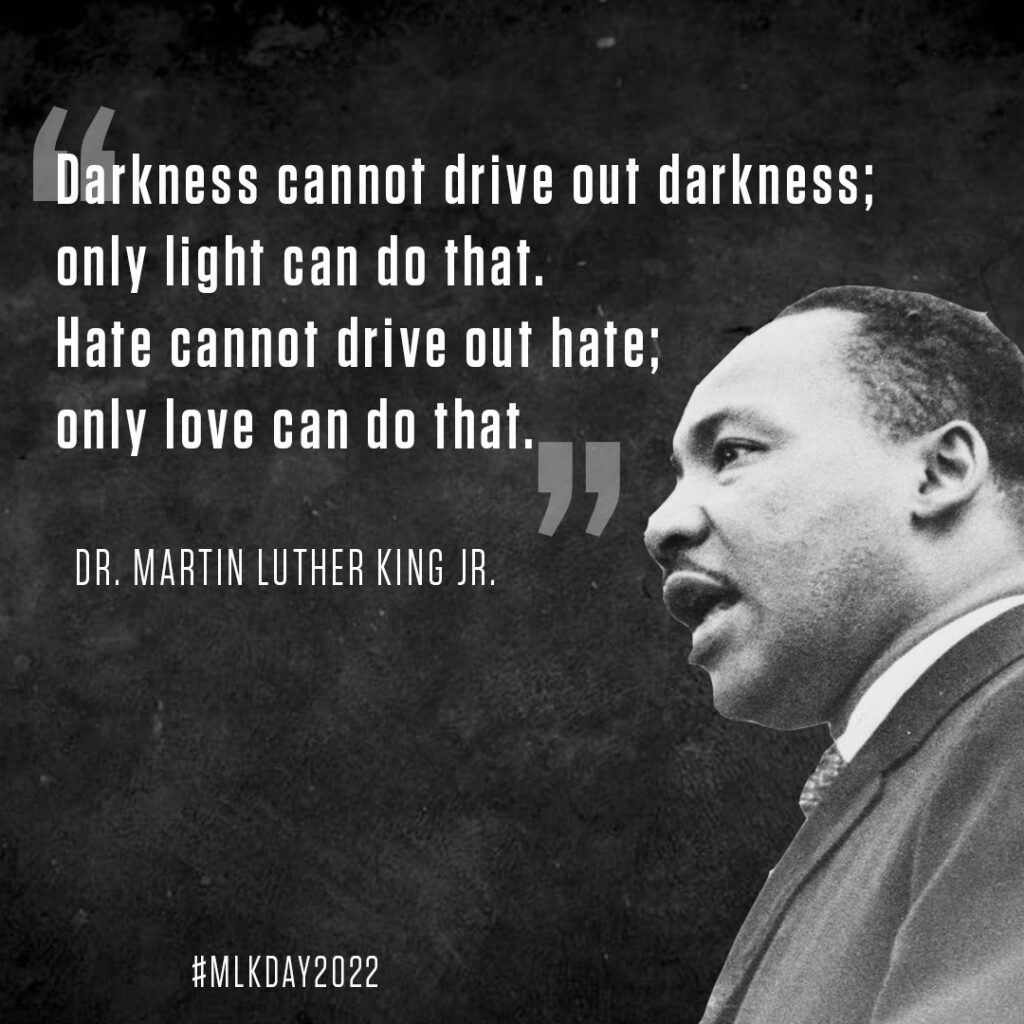
Martin Luther King, Jr. – Dr. King is one of the most impactful figures on American culture in our nation’s history. I count him a prophet because he challenged injustice across our land by leading civil rights followers with both courageous example and eloquent speech, which is what Old Testament prophets did. And he did so as a minister of the gospel and by the teachings of Jesus (nonviolence). His vision – or dream – was racial equality and interracial love. He wouldn’t settle for resorting to retaliation but held tight the priority of mistreated African Americans not taking on the attitude of the hatred with which they had been treated. The abuse he suffered is also reminiscent of that of the Old Testament
prophets, and with comparable impact, even, as many Bible prophets, to martyrdom . I consider MLK Jr. the prophet to America in the twentieth century.


3. Evangelists


Billy Graham – Dr. Graham preached the gospel in person to more people than anyone in
history. Yet many came to faith in Christ by watching his crusades on TV. There have been many effective evangelists in America, but Billy Graham stands apart from all others as the evangelist to our land in the past one hundred years.


4 & 5. Pastors/Teachers
We’ve had many, many wonderful pastors/teachers these past hundred years, so many that I almost scrapped this blog for my inability to decide whom to exclude. I’m going to list several and include their more specific contributions (in parentheses).This list is a very subjective list, based on my opinion and limited by my own exposure. I know many would disagree with some of my choices and I’m ok with that.


Rick Warren (organizer) – The lead pastor and founder of Saddleback Community Church
constructed the mold for local church structure. His Purpose Driven Church is my favorite on the topic. And his Purpose Driven Life and Forty Days of Purpose have helped millions of individual Jesus followers organize their walk with Christ in an effective Scriptural way.


Tony Evans (teacher & master of the sermon illustration) – Senior Pastor of Oak Cliff Bible
Fellowship in Dallas, Dr. Evans is my favorite Bible teacher/preacher. Whether topical or expository (not necessarily mutually exclusive), his preaching is clear, Scriptural and edifying. His mastery of using relevant illustrations to help listeners understand God’s Word is second, in my opinion only to Jesus Himself. Pastor Evans is also a prolific author. His ministry has crossed racial and cultural lines, doing much to unify a historically divided U.S. church.


I want to include others – though I’ll surely leave out many – who have been used by God to equip many Christians in the U.S. to serve God.

Chuck Swindoll (teacher), Charles & Andy Stanley (teachers), Adrian Rogers (teacher), John Piper (teacher), John McArthur (teacher), TD Jakes (teacher), Joel Osteen (encourager), Craig Groeschel (teacher & innovator of smart phone Bible app), Steven Furtick (teacher),
Joyce Meyer (women, as well as me and other men), James Dobson (family)


Finally, let me not neglect to mention the less-known local pastors across our land. Some of the very best preaching, teaching and ministry of all kinds is carried out by the local pastors and leaders of our local churches. They may not be as widely known, but their impact may actually be even greater than the list of well-knowns I’ve made above.


Dear God, thank You for every person named and unnamed here! Please bless them all and all of us whom they’ve so faithfully equipped!